Source Industrial Grade Measuring Wheel for Road Surveying
Compare 30 industrial grade measuring wheels with steel and plastic construction from China. Buyers can evaluate accuracy, measuring range, and customization options for surveying and distance measurement tasks.
Key considerations
Products List


Comprehensive Sourcing Guide
Strategic Sourcing Guide for Industrial Grade Measuring Wheels
Understanding Technical Specifications and Performance Metrics
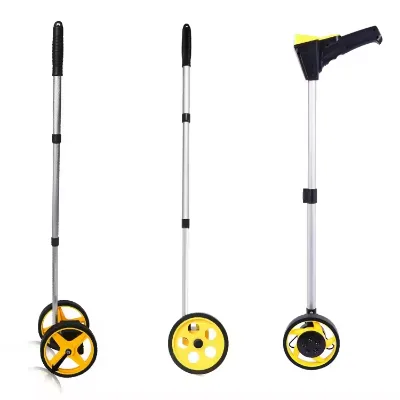
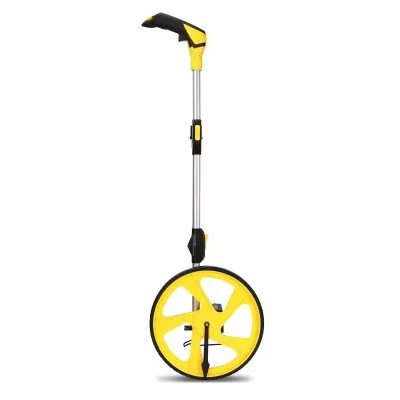
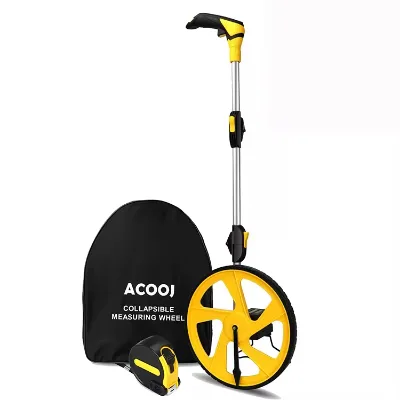
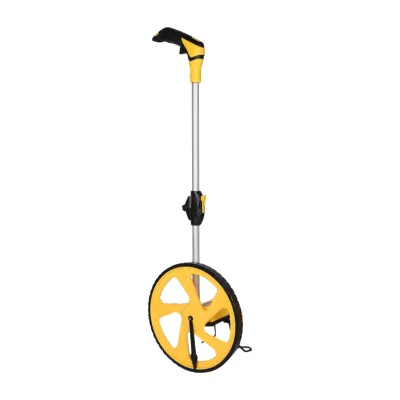
When sourcing an industrial grade measuring wheel, the primary objective is to align the device's technical capabilities with the specific demands of the intended application. The market offers a variety of configurations, ranging from basic mechanical units to more complex digital systems. A critical observation in the current supply landscape is the variation in material composition. While some units are constructed with a combination of steel and plastic to ensure durability in rugged environments, others rely heavily on plastic components. This distinction directly impacts the device's resistance to impact, chemical exposure, and long-term wear. Buyers must verify the material grade of the wheel and housing, as industrial applications often require components that can withstand heavy usage without deformation.
Accuracy is another paramount specification that varies significantly across different product models. Some units in the market claim a measuring accuracy of ±0.05m, while others boast a precision of 1mm or even "less than 1mm." In high-stakes industrial scenarios, such as civil engineering or large-scale logistics, a margin of error of 5 centimeters may be unacceptable. Conversely, for general inventory checks or rough distance estimations, a lower accuracy threshold might suffice. The maximum measuring range is also a defining factor; observed data indicates ranges extending up to 99,999.9 meters, which is essential for long-distance surveying tasks. However, other models may be limited to 9,999.9 meters. Procurement teams must ensure the selected unit's range exceeds the maximum expected distance of a single measurement cycle to avoid the need for resetting and recalculating, which introduces potential human error.
Furthermore, the operational mechanics of the wheel influence its suitability for different terrains. The maximum counting speed is a critical performance metric, with some units capable of handling up to 360 revolutions per minute. This specification determines how quickly a user can traverse a site without losing data integrity. Additionally, the physical dimensions of the wheel itself, such as a 318mm diameter, affect the device's ability to roll over obstacles like gravel, grass, or uneven pavement. Larger wheels generally provide better obstacle clearance and smoother rolling characteristics, whereas smaller wheels may be more compact but struggle with rough terrain. The handle type, whether mechanical or adjustable, also plays a role in user ergonomics, with extended lengths ranging from 500mm to 1000mm allowing for customization based on the operator's height and preference.
Compliance, Certification, and Standard Verification
In the realm of industrial procurement, compliance and adherence to standards are non-negotiable, yet the specific certification status of individual products often requires direct verification from the supplier. While the supply chain for measuring wheels is robust, with significant production originating from regions like Hebei, China, the presence of specific certifications cannot be assumed without documentation. Buyers should not rely on general market assumptions regarding compliance but must request explicit proof of adherence to relevant international or national standards.
The concept of "Industrial grade" implies a certain level of robustness and reliability, but this label alone does not guarantee compliance with safety or quality management systems. Procurement teams must inquire about the specific standards the manufacturer claims to follow. For instance, while some product listings reference standard dimensions or packaging norms, these do not equate to product safety certifications. It is essential to distinguish between packaging standards and product performance standards. The buyer should verify if the product meets ISO standards for quality management or specific industry regulations regarding measurement equipment accuracy.
Furthermore, the origin of the product is a significant factor in compliance. With a high concentration of manufacturing in China, buyers should be aware of the regulatory environment in the place of origin. While the supply chain is active, the specific export compliance of the supplier regarding measurement instruments must be confirmed. This includes verifying that the device meets the legal metrology requirements of the destination country. In many jurisdictions, measuring instruments used for trade or official surveying must be certified by a recognized body. Therefore, the procurement process must include a step to validate that the specific model number, such as JS320 or MW318, has the necessary legal metrology certification for the intended market.
Buyers should also scrutinize the warranty terms as an indicator of the manufacturer's confidence in their compliance and quality. A standard one-year warranty is observed in the market, but the scope of this warranty—whether it covers manufacturing defects, calibration drift, or physical damage—must be clearly defined. The absence of a specific certification label on a product page should not deter a buyer from proceeding, provided they establish a rigorous verification protocol. This involves requesting test reports, calibration certificates, and declarations of conformity before finalizing any order. The goal is to ensure that the "Industrial grade" designation is backed by verifiable data rather than marketing terminology.
Cost Drivers and Pricing Dynamics
The pricing structure for industrial grade measuring wheels is influenced by a complex interplay of factors, including material costs, manufacturing complexity, and customization requirements. The observed price range in the market spans from $0.20 to $100.00 USD, a variance that reflects the diversity of product offerings from basic mechanical units to more sophisticated digital systems. The lower end of this spectrum typically corresponds to simpler models with plastic construction and basic mechanical dials, which are suitable for light-duty applications. In contrast, the higher price points are associated with units featuring steel reinforcement, higher accuracy ratings, and advanced digital displays.
Material composition is a primary driver of cost. Units constructed with a steel and plastic composite generally command a higher price than those made entirely of plastic due to the increased durability and resistance to wear. The weight of the product, which can range from 1.8 kg to over 10 kg per unit, also correlates with the amount of raw material used and the resulting shipping costs. Heavier units, often indicative of higher quality construction, will incur higher freight charges, which can significantly impact the total landed cost for the buyer.
Customization is another significant cost factor. The market supports OEM (Original Equipment Manufacturer) services, allowing buyers to request specific branding, color options, or packaging modifications. While the base unit price may remain stable, the costs associated with custom molds, branding, and specialized packaging can increase the overall expenditure. The "Customized Packaging" option, for example, may require additional setup fees or higher minimum order quantities (MOQ) to be economically viable.
The MOQ also plays a crucial role in the unit price. The observed MOQ range spans from 1 to 10,000 units. Buyers purchasing small quantities, such as the minimum of 5 pieces or even single items, will likely face a higher per-unit cost compared to those placing bulk orders. Suppliers often offer tiered pricing structures where the unit price decreases as the order volume increases. This is particularly relevant for industrial clients who need to equip multiple teams or replace aging inventory. Additionally, payment terms such as T/T, L/C, and Western Union can influence the final cost, as certain payment methods may carry transaction fees or require specific credit terms that affect the overall financial arrangement.
Typical Applications and Use Cases
Industrial grade measuring wheels are versatile tools designed to meet the demands of a wide array of sectors. Their primary application is the measurement of road distances, making them indispensable for civil engineering, road construction, and municipal planning. In these contexts, the ability to accurately measure long stretches of pavement or unpaved roads is critical for project estimation and resource allocation. The high measuring range of up to 99,999.9 meters ensures that these tools can handle large-scale infrastructure projects without the need for frequent resets.
Beyond road measurement, these devices are widely used in logistics and warehousing. In large distribution centers, the ability to quickly measure aisle lengths, storage bay dimensions, and total facility footprint is essential for inventory management and layout optimization. The portability and ease of use of mechanical measuring wheels make them ideal for these environments, where speed and accuracy are paramount. The "Measuring Rode Distance" application highlights their utility in surveying and mapping, where precise distance data is required for creating accurate site plans.
In the agricultural sector, measuring wheels are used to estimate field sizes, plan irrigation systems, and calculate crop yields. The rugged construction of industrial-grade models allows them to perform reliably in outdoor environments with varying terrain conditions. Similarly, in the utility industry, these tools are employed to measure pipeline lengths, cable routes, and other linear infrastructure projects. The accuracy of 1mm or better is particularly valuable in these applications, where small errors can lead to significant cost overruns or safety hazards.
The versatility of the measuring wheel is further enhanced by its adaptability to different handle types and wheel sizes. For instance, the adjustable handle length allows operators of different heights to use the device comfortably, reducing fatigue during long measurement sessions. The availability of different wheel sizes, such as the 318mm diameter, ensures that the tool can be selected based on the specific terrain and accuracy requirements of the task. Whether for rough terrain or smooth indoor surfaces, the industrial grade measuring wheel remains a fundamental tool for distance measurement across diverse industries.
Supplier Evaluation and Quality Control Protocols
Evaluating suppliers for industrial grade measuring wheels requires a systematic approach that goes beyond simple price comparison. The first step is to verify the supplier's location and production capabilities. With a significant number of manufacturers based in Hebei, China, buyers should assess the supplier's proximity to raw material sources and their logistical capabilities. The "place of origin" is a key indicator of the supply chain's efficiency, but it should be complemented by an assessment of the supplier's reputation and track record.
Quality control is a critical component of the supplier evaluation process. Buyers should request detailed information about the manufacturer's quality assurance procedures, including in-process inspections and final product testing. The "Industrial grade" designation should be supported by evidence of rigorous testing, such as accuracy verification, durability testing, and environmental resistance checks. The observed accuracy claims, such as ±0.05m or 1mm, must be validated through independent testing or calibration certificates.
Another important factor is the supplier's ability to provide customization and support. The availability of OEM services and customized packaging indicates a supplier's flexibility and commitment to meeting specific client needs. Buyers should also evaluate the supplier's response time and communication efficiency, as these factors can impact the overall procurement experience. The "Delivery time" of one week is a common benchmark, but buyers should confirm if this timeline is consistent and reliable for their specific order volume.
To ensure long-term reliability, buyers should establish a clear quality control protocol that includes pre-shipment inspections and post-delivery validation. This may involve third-party inspection services to verify that the received goods match the agreed specifications. The warranty terms, typically one year, should be clearly understood and documented, including the process for handling claims and repairs. By implementing a robust supplier evaluation and quality control framework, buyers can mitigate risks and ensure a steady supply of high-quality measuring wheels.
Long-Term Procurement Considerations and Sustainability
Sourcing industrial grade measuring wheels is not merely a transactional activity but a strategic decision that impacts long-term operational efficiency. Buyers must consider the total cost of ownership, which includes not only the initial purchase price but also maintenance, calibration, and replacement costs. The durability of the product, determined by its material composition and build quality, is a key factor in minimizing long-term expenses. Units constructed with steel and plastic composites may offer a longer lifespan than those made entirely of plastic, reducing the frequency of replacements.
Sustainability is also becoming an increasingly important consideration in procurement. Buyers should evaluate the environmental impact of the product lifecycle, from manufacturing to disposal. The use of recyclable materials and energy-efficient manufacturing processes can contribute to a more sustainable supply chain. Additionally, the packaging, which is often customized, should be designed to minimize waste and maximize efficiency. The "Soft Bag and Carton" or "Soft Bad and Carton" packaging options should be assessed for their environmental footprint.
Furthermore, the availability of spare parts and technical support is crucial for maintaining the longevity of the equipment. Buyers should verify that the supplier offers a reliable supply of replacement wheels, handles, and other components. The "One Year" warranty is a standard offering, but the availability of extended warranty options or service contracts can provide additional peace of mind. By focusing on long-term procurement considerations, buyers can build a resilient supply chain that supports their operational needs for years to come.
Comparative Analysis of Key Product Attributes
To facilitate informed decision-making, it is helpful to compare the key attributes of different measuring wheel models available in the market. The following table summarizes the observed specifications and variations across different product listings.
| Attribute | Model A (General) | Model B (High Precision) | Model C (Heavy Duty) |
|---|---|---|---|
| Material | Steel + Plastic | Plastic | Steel + Plastic |
| Accuracy | ±0.05m | 1mm | Less Than 1mm |
| Max Range | 99999.9m | 9999.9m | 0-9999.9m |
| Wheel Size | N/A | 318mm | N/A |
| Weight | 1.800 kg | 9-12kgs | 10.000 kg |
| Handle Type | Mechanical | Mechanical | Mechanical |
| Origin | Hebei, China | China | China |
| Warranty | 1 Year | 1 Year | 1 Year |
| MOQ | 5 PCS | 5 PCS | 5 PCS |
This comparison highlights the trade-offs between accuracy, weight, and material composition. Buyers must weigh these factors against their specific application requirements to select the most suitable model. For instance, a project requiring high precision over short distances might prioritize the 1mm accuracy of Model B, while a large-scale infrastructure project might favor the robustness and high range of Model C. By carefully analyzing these attributes, procurement teams can make data-driven decisions that optimize performance and cost-effectiveness.
FAQs
What is the measuring accuracy of the industrial grade measuring wheel?
The device offers a measuring accuracy of ±0.05m or 1mm depending on the specific model selected. Some units provide a precision of less than 1mm for high-stakes applications, while others may claim a counting accuracy of more than 99%.
Which material composition is used for the industrial grade measuring wheel?
Products are constructed from a combination of steel and plastic or entirely from plastic to ensure durability. The steel and plastic composite offers enhanced resistance to impact and wear, suitable for rugged industrial environments.
Can the product be customized with specific branding or packaging?
Yes, the manufacturer supports OEM customization and offers customized packaging options upon request. Buyers can often select specific colors and request tailored packaging solutions to meet their branding requirements.
How long is the delivery time for orders of industrial grade measuring wheels?
The standard delivery time is one week from the date of order confirmation. This lead time applies to standard orders, though bulk purchases or customized requests may require additional processing time.
What is the maximum measuring range available for these devices?
The maximum measuring range extends up to 99,999.9 meters for long-distance surveying tasks. Some models are limited to a range of 9,999.9 meters, so users should verify the specific model capacity.
What is the minimum order quantity for purchasing industrial grade measuring wheels?
The minimum order quantity varies from 5 pieces to 10,000 units depending on the supplier and product configuration. Small buyers can often start with as few as 5 pieces, while bulk orders benefit from tiered pricing.